Listen to the episode
Episode Summary
At the center of the episode is the compelling narrative detailed in Owen’s true crime book, *Convergence*. Transporting listeners to mid-1970s Chicago during the political reign of Mayor Richard J. Daley, Gregg revisits a cold four-year-old double murder case that his office considered an unwinnable dead end. A wealthy, politically connected suspect had secured an extraordinarily low bond, crucial physical evidence had mysteriously vanished from police lockers, and the lone eyewitness was pleading the Fifth. Undeterred by the vanishing evidence and the pervasive cynicism of the era, Gregg and his partner took on the case to ensure the victims finally had a voice in court.
The rabbit hole plunges even deeper into the real-world backdrop of the investigation: Operation Greylord, which remains the largest judicial corruption sting in American history. Gregg recounts the unbelievable moment an overwhelmed young prosecutor named Terry Hake broke down over courthouse bribes, only to be recruited by the FBI as an undercover operative known as "The Mole"—wearing a wire for four years while his former colleagues believed he had turned crooked. In an incredible twist of fate, Gregg reveals how his past rock ’n’ roll credentials became his greatest prosecutorial asset, helping him win over terrified witnesses at the famous Faces disco and Chicago’s Water Tower Place. Packed with gritty period details, unbelievable coincidences, and fierce perseverance, this episode pulls back the curtain on one of the most corrupt eras in American legal history.
A Murder Case Everyone Wanted to Abandon
What do you do when witnesses vanish, evidence disappears, and corruption reaches into the courtroom itself?
Former Cook County homicide prosecutor Gregg Owen faced exactly that challenge.
In this episode of Rainy Day Rabbit Holes, Gregg joins Shea to discuss his upcoming true crime book, Convergence, which chronicles an extraordinary double murder prosecution that unfolded during one of the most corrupt periods in Chicago's history.
But Gregg's story is anything but ordinary.
Before becoming a prosecutor, he spent years as a professional musician, sharing stages with legendary performers and living the life of a touring rock artist. Then one unexpected decision changed everything, launching him into a legal career that would place him at the center of murder trials, gang prosecutions, and one of the largest judicial corruption scandals ever uncovered in America.
From Rock Stages to Courtrooms
Gregg recounts his unlikely transition from musician to prosecutor, including:
- Opening for legendary acts including The Doors
- Touring during the late 1960s and early 1970s
- Attending law school while performing professionally
- The chance encounter that changed the course of his life
- Why courtroom advocacy felt unexpectedly similar to being on stage
You'll also hear incredible firsthand stories from Chicago's music scene and Gregg's unforgettable encounter with Jim Morrison.
Inside Chicago's Corruption Era
The conversation takes a darker turn as Gregg describes the realities of practicing law during one of Chicago's most infamous periods.
Topics include:
- Operation Greylord
- Judicial corruption in Cook County courts
- How bribery influenced criminal proceedings
- The undercover FBI operation that changed everything
- The challenges prosecutors faced when pursuing justice
- Why some cases seemed impossible to win
Gregg explains how prosecutors learned to expect missing evidence, compromised witnesses, and unexpected obstacles before every major trial.
The Story Behind Convergence
At its heart, Convergence is more than true crime.
It's a story about perseverance, character, and refusing to abandon victims when the system fails.
Gregg discusses:
- The double murder case that inspired the book
- Why victims remained central to the story
- How unlikely connections helped break the case
- The role integrity plays when doing the right thing comes at a personal cost
- The life lessons he hopes readers will take away
Gregg Owen Links
🌐 Website
https://www.greggowen26th.com/
📚 Books
https://www.greggowen26th.com/books/
https://www.instagram.com/greggowen26th/
🎧 Convergence is available through major booksellers, Audible, Apple Books, Amazon, and Barnes & Noble.
Related Episodes
If you enjoyed this episode, check out:
📌 When Tylenol Turned Deadly
https://www.rainydayrabbitholes.com/podcast/when-tylenol-turned-deadly
📌 Mayhem and the Mob: Grit City's Dark Past
https://www.rainydayrabbitholes.com/podcast/29-mayhem-and-the-mob-grit-citys-dark-past
📌 Smooth Criminal: Roy Olmstead, Seattle's Good Bootlegger
https://www.rainydayrabbitholes.com/podcast/36-smooth-criminal-roy-olmstead-seattles-good-bootlegger
Key Takeaways
- Gregg Owen transitioned from professional musician to homicide prosecutor through an unexpected twist of fate.
- Convergence centers on a double murder case many believed was impossible to prosecute.
- Chicago's judicial corruption crisis inspired the events chronicled in the book.
- Operation Greylord became the largest judicial corruption investigation in American history.
- Missing evidence and reluctant witnesses nearly derailed a major murder prosecution.
- Gregg's music background unexpectedly helped him earn the trust of key witnesses.
- Courtroom advocacy shares surprising similarities with live performance.
- The book emphasizes perseverance when justice seems unattainable.
- Victims remain the emotional core of the Convergence story.
- Gregg believes a single decision can completely alter the course of a person's life.
Support this podcast at — https://redcircle.com/history-unhinged-rainy-day-rabbit-holes/exclusive-content
Advertising Inquiries: https://redcircle.com/brands
Privacy & Opt-Out: https://redcircle.com/privacy
Episode Gallery
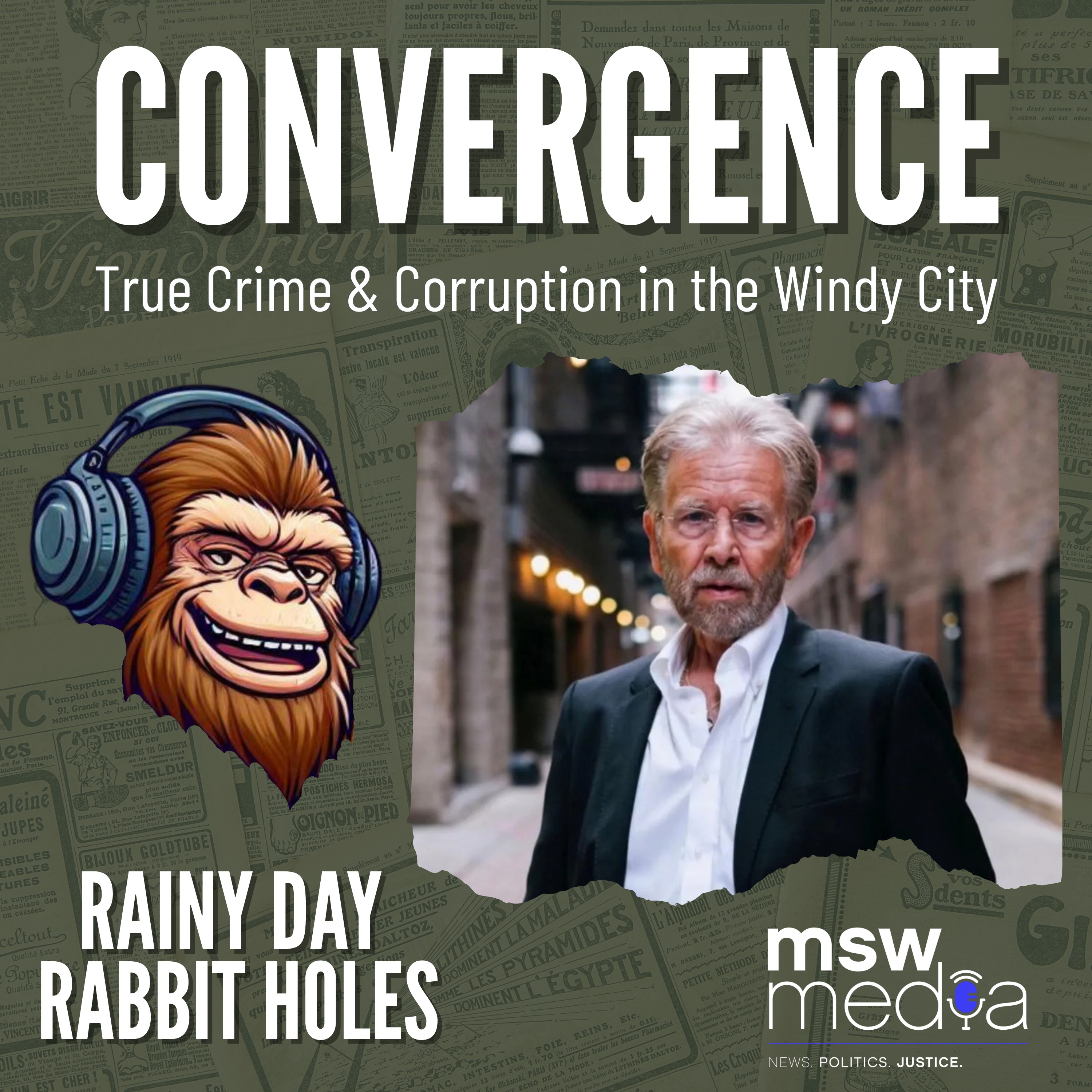
Convergence: True Crime and Corruption in the Windy City episode image